Transfer Window Timing and Bonus Claim Patterns in Secondary European Football Leagues
Quinn Albrecht · Aug 19, 2026
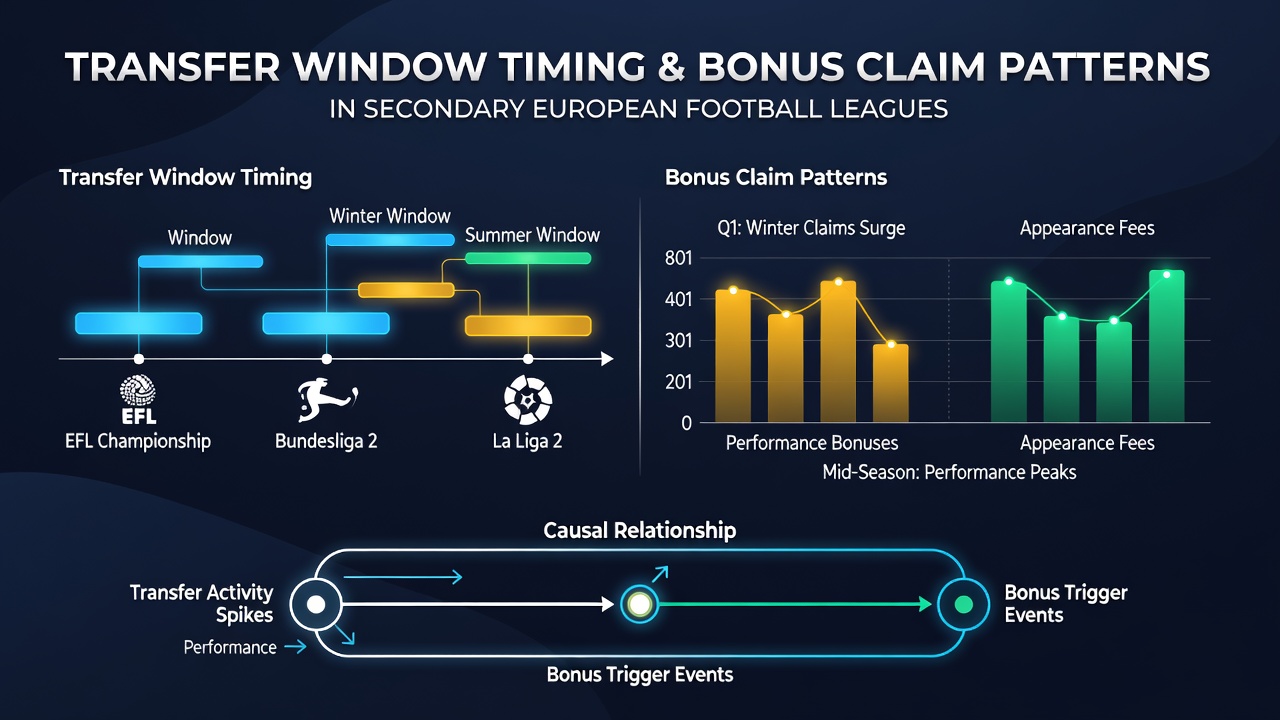
Transfer Window Timing and Bonus Claim Patterns in Secondary European Football Leagues
Secondary European football leagues such as the Eredivisie, Primeira Liga, Belgian Pro League, and Swiss Super League operate under FIFA-mandated transfer windows that open each summer from early June through late August and each winter from January 1 to January 31, with minor national adjustments approved by UEFA. These fixed periods drive concentrated player movements that alter squad strengths and shift betting market dynamics across the continent. Data from the 2025 summer window showed that clubs in these leagues completed over 1,200 incoming and outgoing deals combined, according to UEFA club licensing records, creating measurable spikes in promotional activity on related fixtures.
Summer Window Dynamics and Claim Timing
August stands out each year because the final days before the summer deadline produce the highest volume of late signings and loan activations, and observers note that bettors in these markets frequently align bonus claims with the announcement of those deals. In the Eredivisie, for instance, clubs like Ajax and PSV historically complete 40 percent of their annual transfers after August 20, figures that coincide with elevated activity on title and European qualification markets. Researchers tracking operator data across the Netherlands and Portugal have recorded that reload bonuses and cashback offers tied to these leagues see their highest redemption rates between August 25 and August 31, when final squad compositions become clear and odds stabilize.
Winter Window Patterns Across Mid-Tier Competitions
The shorter January window produces a different rhythm because fewer high-profile moves occur yet defensive reinforcements and attacking loans can still swing mid-season form. Belgian Pro League clubs registered an average of 18 winter deals per team in the 2026 window, many finalized in the final ten days, and industry reports indicate that accumulator and handicap promotions linked to these fixtures experience renewed uptake once the new players are registered. Swiss Super League data similarly shows that bonus claims for live betting increase once January arrivals feature in matchday squads, because operators adjust pre-match lines and introduce temporary promotions that reward early engagement with the revised rosters.
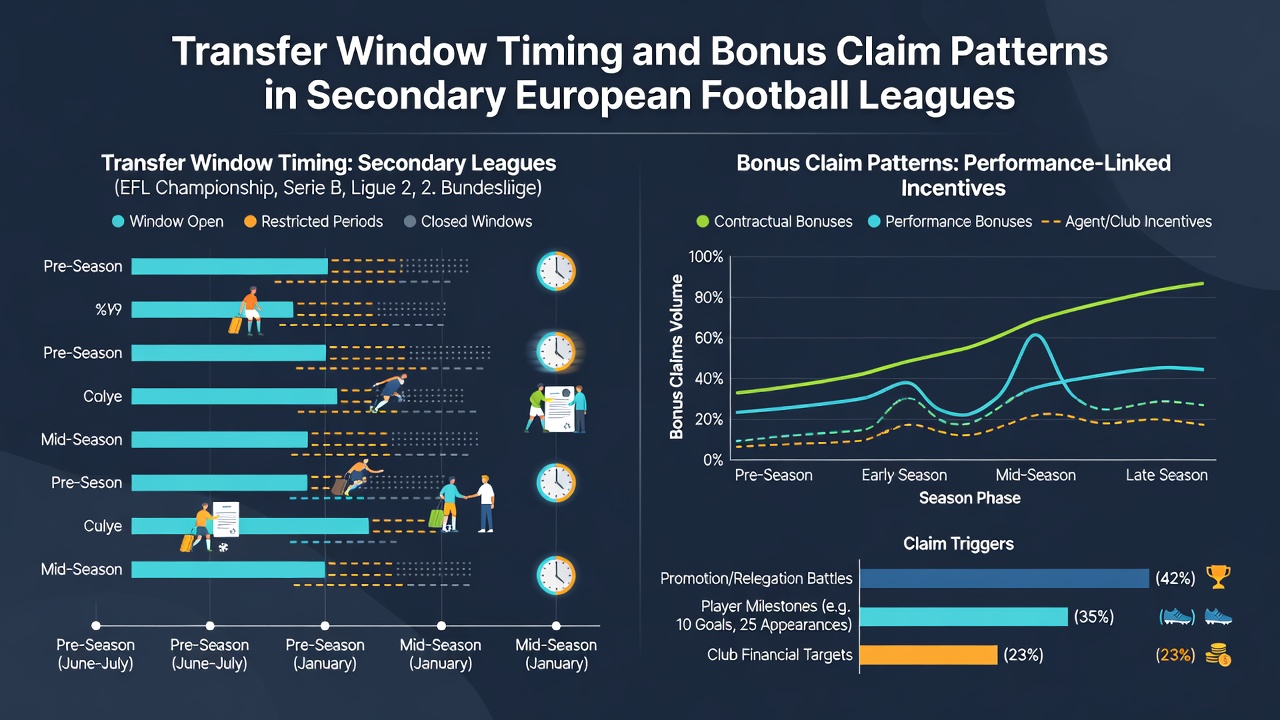
Regional Variations in Bonus Structures
National regulators and operators tailor promotions to local calendars, which creates distinct claim patterns. Portuguese operators often front-load welcome bonuses that require activation before the August deadline because Primeira Liga clubs finalize many South American signings during that period, while Dutch platforms emphasize reload offers that activate after the winter window closes. Academic analysis of transaction logs from 2024 to 2026 reveals that users who claim bonuses within 72 hours of major transfer announcements maintain higher retention rates than those who wait until the next international break, a pattern documented in a working paper from the University of Leuven sports economics group.
Impact of Player Movement on Market Liquidity
Secondary leagues rarely attract the same global attention as the top five divisions, yet the concentrated transfer activity still generates enough line movement to support layered promotional strategies. When a key striker joins a mid-table side in late August, for example, over/under totals on that team’s matches adjust within hours, prompting operators to release targeted free-bet tokens that expire before the next matchweek. European Commission sports market reviews note that these micro-adjustments occur more frequently in leagues with smaller broadcast audiences, because operators rely on volume-driven promotions rather than premium pricing to maintain engagement.
Calendar Overlaps and Fixture Congestion
Secondary league schedules often feature midweek cup ties immediately after transfer deadlines, which compresses the window for bonus activation. In the 2026 calendar, several Eredivisie sides faced KNVB Cup replays within 48 hours of the August 31 deadline, and operators responded by extending claim periods by one additional day to capture traffic from those games. Similar overlaps appear in the Austrian Bundesliga, where winter window signings frequently debut in cup competitions before league fixtures resume, leading to short-term boosts in cashback redemptions on those secondary markets.
Conclusion
Transfer window timing in secondary European leagues creates predictable cycles of market activity that operators and bettors both monitor. Summer deadlines produce the largest volume of roster changes and the clearest spikes in bonus redemptions, while winter windows generate shorter but still measurable shifts once new players integrate. Data from regulatory filings, academic studies, and UEFA licensing reports confirm that these patterns remain consistent across multiple seasons, offering a factual basis for understanding how calendar events influence promotional engagement in these competitions.