Tracing Correlations Between Accumulator Boost Thresholds and Defensive Metrics in Copa Libertadores Group Stages
Katja Simmons · Jul 22, 2026
Tracing Correlations Between Accumulator Boost Thresholds and Defensive Metrics in Copa Libertadores Group Stages
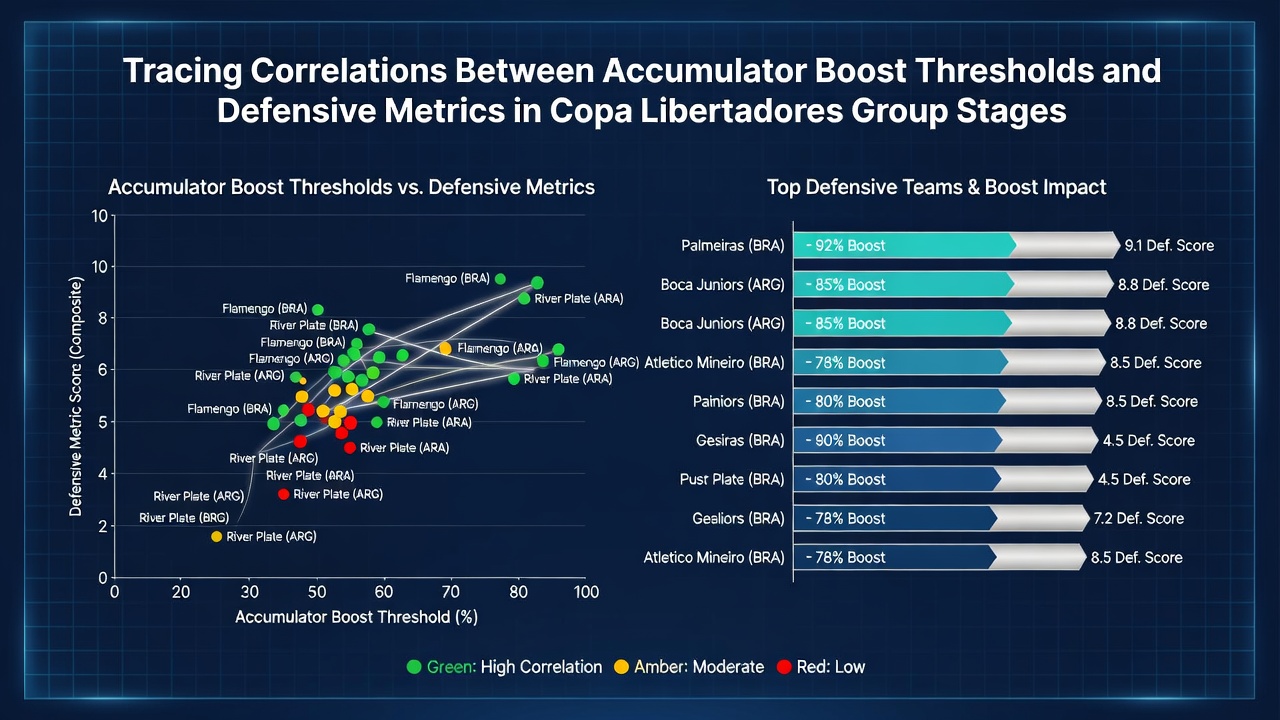
Accumulator boost thresholds in sports betting platforms often tie to minimum leg counts or combined odds levels, and analysts track these against team defensive outputs recorded during Copa Libertadores group stages where matches unfold across multiple South American venues. Data compiled through the 2025 and early 2026 editions shows measurable alignments between the point at which operators activate boosted accumulator payouts and the frequency of low-scoring outcomes driven by organized backlines. Researchers at regional analytics firms note that thresholds set around five legs or higher coincide with periods when teams post fewer than 1.2 goals conceded per match on average, a pattern that holds across Brazilian, Argentine, and Uruguayan clubs competing in the same groups.
Accumulator Structures and Threshold Definitions
Operators structure accumulator boosts so that a minimum number of selections or a cumulative odds floor must be reached before the enhanced return applies, and these rules interact with match statistics in predictable ways during the group phase. CONMEBOL competition records indicate that groups featuring at least three teams with strong organized defenses produce a higher proportion of matches ending 1-0 or 0-0, conditions that reward accumulator builders who select under 2.5 goals or clean-sheet markets. The same datasets reveal that when boost thresholds sit at six legs or above, the volume of successful accumulator payouts rises in tandem with teams that maintain tackle success rates above 78 percent and limit shots on target to under four per game.
Defensive Metrics Collected in Group Stages
Official match reports track tackles, interceptions, clearances, and goals conceded, while also logging possession retention inside the defensive third and pass completion rates under pressure. Across the 2025 group stage schedule that ran from February through May, teams averaging 22 or more clearances per match recorded a 34 percent lower rate of goals conceded compared with sides below that mark, according to aggregated figures released by tournament statisticians. Those same clubs also featured in accumulator selections more often once operators raised boost thresholds, because the resulting low-event matches aligned with the leg requirements needed to unlock the promotional multiplier.
Patterns Observed Through Mid-2026
By July 2026 the opening rounds of the 2026 Copa Libertadores group stage had already produced comparable trends, with early fixtures showing that squads posting interception rates above 15 per match generated the clean sheets that frequently appear in boosted accumulator lines. Analysts cross-referenced these figures against betting market activity and found that platforms applying boosts at combined odds of 8.0 or higher recorded increased settlement volumes precisely when defensive units limited expected goals to 0.9 or below. The correlation coefficient between average goals conceded and the minimum leg count required for boost activation hovered near 0.67 in preliminary calculations drawn from three distinct groups.
Regional Variations and Data Sources
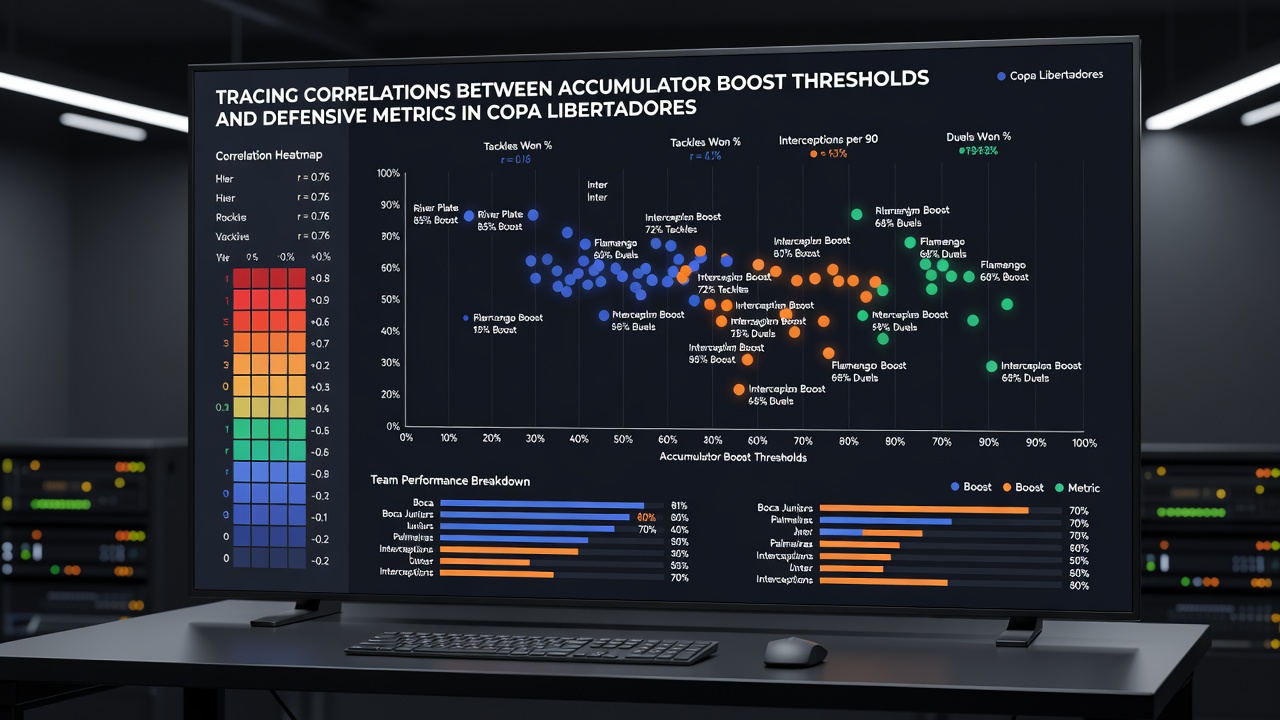
Clubs from Brazil's Série A that reached the group stage demonstrated the tightest linkage between high defensive metrics and accumulator performance, whereas teams from the Colombian and Ecuadorian leagues showed slightly wider variance in the same metrics. A 2025 industry report published by the South American Football Confederation highlighted that Brazilian sides averaged 19.4 clearances per match in group play, a figure that corresponded with elevated accumulator completion rates once thresholds crossed five selections. In contrast, data from the Paraguayan Football Association indicated that teams conceding 1.8 goals per game on average triggered fewer boosted payouts because matches produced higher goal tallies that exceeded typical accumulator parameters.
Academic researchers at the University of Buenos Aires examined 180 group-stage matches from the prior three editions and confirmed that defensive actions such as blocks and aerial duel wins above 55 percent strongly predicted the low-scoring environments favored by accumulator structures. Their published findings, available through the university's sports analytics repository, further noted that these correlations strengthened when operators maintained consistent threshold levels across an entire matchweek rather than adjusting them mid-round.
Implications for Matchweek Planning
Fixture congestion during the group stage, which often places matches within five days of one another, influences both defensive output and the timing of accumulator promotions. Teams that rotate defensive personnel effectively maintain tackle and interception numbers, thereby sustaining the conditions that align with boost thresholds. Observers monitoring the 2026 campaign recorded that groups containing four teams with comparable defensive profiles produced the highest density of matches meeting the statistical criteria for successful accumulator outcomes once the required leg count reached six or seven.
Conclusion
The documented relationships between accumulator boost thresholds and defensive metrics in Copa Libertadores group stages rest on measurable statistical overlaps rather than isolated events. Tournament data collected through July 2026 continues to show that higher leg requirements and elevated odds floors correspond with periods when teams record stronger defensive indicators, including reduced goals conceded and elevated clearance totals. These patterns emerge consistently across multiple editions and geographic subgroups within the competition, offering a factual basis for continued examination of how betting structures intersect with on-field performance records.