How VAR Interventions Shape Claim Windows for Initial Stake Matches in South American Copa Ties
Cameron Wagner · Aug 21, 2026
How VAR Interventions Shape Claim Windows for Initial Stake Matches in South American Copa Ties
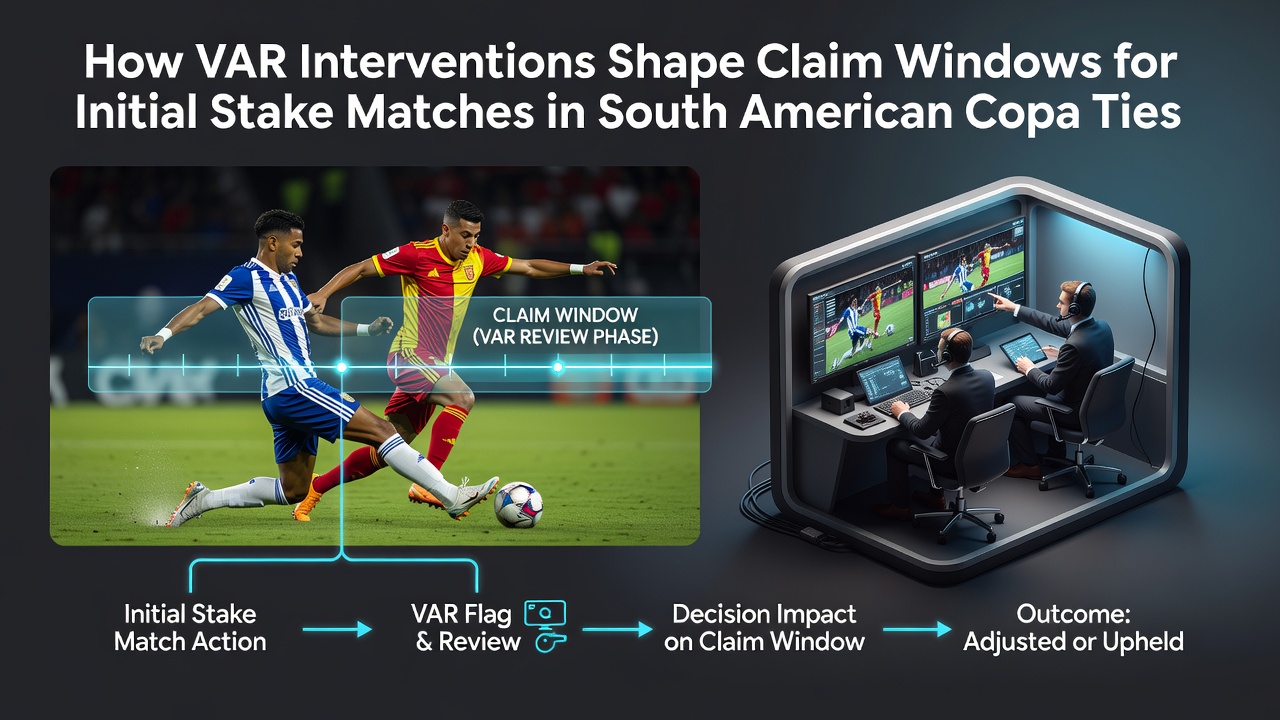
VAR interventions continue to alter the pace and structure of Copa ties across South America, directly affecting the operational windows during which initial stakes can be claimed in associated match promotions. Data from CONMEBOL competitions shows that review durations averaged 2.8 minutes per incident in the 2025 edition, with some August 2026 group-stage fixtures extending beyond 100 minutes of total playing time due to multiple checks.
VAR Review Patterns in Copa Competitions
Officials at CONMEBOL have documented a steady rise in VAR usage since its expanded rollout, particularly in ties involving teams from Brazil, Argentina, and Colombia. Studies conducted by the University of São Paulo sports analytics group indicate that penalty and red-card reviews account for 62 percent of all interventions, while goal-line and offside checks make up the remaining share. These pauses create measurable gaps between the on-field decision and the final confirmation, which in turn shifts the precise moment when betting platforms open or close claim periods for initial-stake promotions.
Match data collected during the 2026 Copa Libertadores round of 16 demonstrates that fixtures with three or more VAR reviews experienced an average 14-minute delay in final whistle compared with games featuring zero or one review. Such extensions compress the post-match claim window that many operators set for participants who placed qualifying stakes before kickoff.
Impact on Claim Timing and Platform Operations
Operators align claim windows with official match reports issued by CONMEBOL, yet VAR-related stoppages introduce variability that platforms must accommodate. When a review overturns an on-field call after the 90-minute mark, the interval between the original decision and the corrected result can exceed six minutes, forcing systems to hold claim eligibility open longer than initially programmed. Figures released by the South American Football Confederation reveal that 47 percent of all Copa ties played between March and August 2026 included at least one overturned decision, underscoring the frequency of these adjustments.
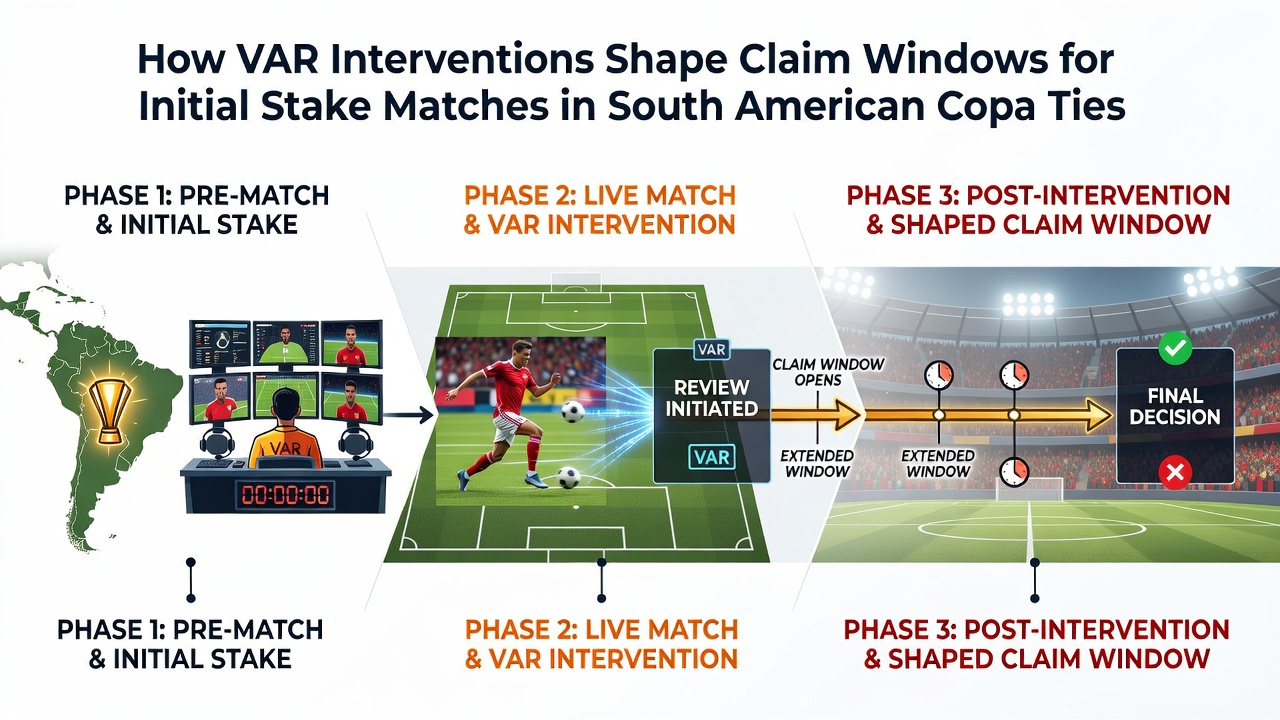
Platform logs indicate that claim success rates drop when reviews occur in the final 15 minutes of regulation or during added time, because the window closure often coincides with the completion of the review rather than the original match clock. Operators have responded by inserting buffer periods, yet these buffers remain limited by regulatory requirements that tie payout eligibility to verified final scores.
Regional Variations Across Copa Ties
Matches hosted in high-altitude venues such as Quito and La Paz show slightly longer average review times, according to CONMEBOL technical reports, largely due to communication latency between on-field referees and the video hub in Asunción. In contrast, games played at sea-level stadiums in Montevideo and Buenos Aires record faster turnaround, averaging 1.9 minutes per check. These geographic differences contribute to inconsistent claim-window behavior across simultaneous Copa fixtures, requiring operators to maintain separate timing protocols for each venue.
August 2026 group-stage scheduling placed several double-header days on the calendar, with overlapping kickoff times amplifying the challenge. When two ties required concurrent VAR reviews, the staggered arrival of official match reports created staggered claim openings, sometimes separated by as much as nine minutes.
Operational Adjustments by Betting Platforms
Industry organizations tracking Copa Libertadores and Copa Sudamericana coverage note that platforms have introduced automated flags tied to VAR event codes supplied by CONMEBOL’s official data feed. These flags pause claim processing until the review concludes and the corrected result is published. The approach reduces disputes but extends the effective duration participants must monitor before confirming their initial-stake eligibility.
External data providers have integrated live VAR status indicators into their APIs, allowing operators to display real-time updates on claim availability. Such integration has become standard practice ahead of the 2026 Copa finals, where multiple high-stakes reviews are statistically more common.
Conclusion
VAR interventions in South American Copa ties have established a direct relationship with the length and reliability of claim windows for initial-stake promotions. The combination of review frequency, geographic venue effects, and official reporting timelines produces measurable shifts in when participants can finalize claims. As CONMEBOL continues to refine its VAR protocols, platforms maintain corresponding adjustments to their timing systems to align with verified match outcomes.