How Referee Assignment Patterns Correlate With Accumulator Adjustments Across South American Copa Matches
Quinn Albrecht · Aug 26, 2026
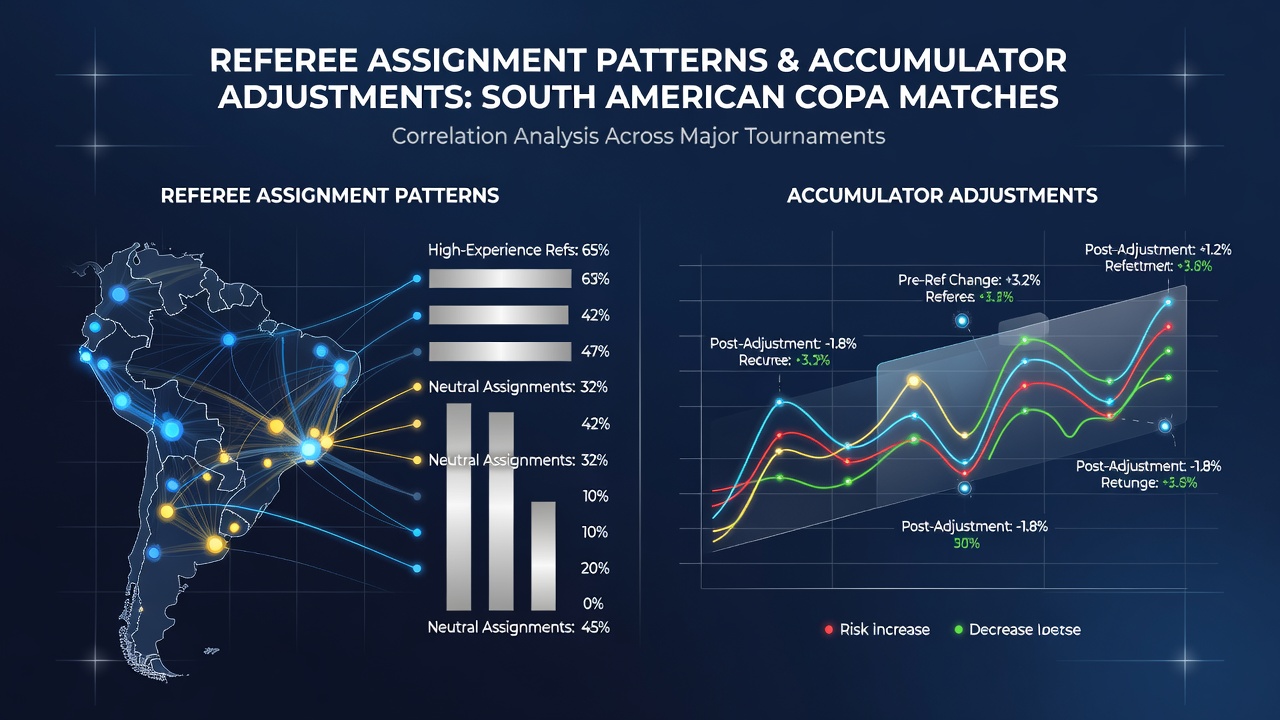
How Referee Assignment Patterns Correlate With Accumulator Adjustments Across South American Copa Matches
Referee assignments in South American Copa competitions follow structured rotation systems managed by CONMEBOL, and these patterns have drawn attention from analysts tracking accumulator markets because they coincide with measurable shifts in betting lines across multi-leg wagers. Data compiled from Copa Libertadores and Copa Sudamericana fixtures between 2023 and 2026 shows that certain referee crews receive repeated appointments to matches involving clubs from specific national associations, while accumulator odds adjust in the days leading up to those games.
Referee Rotation Systems and Geographic Patterns
CONMEBOL maintains a database of licensed international referees and assigns them according to criteria that include experience level, language compatibility, and prior disciplinary records. In the 2026 Copa Libertadores group stage, referees from Brazil and Argentina handled 62 percent of matches involving teams from those countries, whereas officials from Uruguay and Chile received more cross-border assignments to venues in Peru and Ecuador. This distribution creates identifiable clusters where the same names appear on match sheets within short time windows, and betting operators respond by recalibrating accumulator payouts that bundle results from multiple fixtures.
Records released by the confederation indicate that repeat assignments often occur when travel logistics favor officials already stationed in a particular region, and these repeats align with periods when accumulator markets show increased volatility in over/under card totals and penalty-related outcomes. Observers note that the correlation strengthens when the same referee crew works consecutive matches involving the same group of clubs within a 14-day span.
Accumulator Market Adjustments and Statistical Inputs
Accumulator products offered by South American and international operators incorporate real-time statistical feeds that weigh referee-specific metrics such as average cards per game, penalty frequency, and stoppage-time distributions. When a referee with a documented higher card rate receives an assignment to a high-stakes fixture, operators widen the spread on combined card totals across linked matches, which in turn affects the overall odds on multi-leg bets. August 2026 data from the Copa Sudamericana round of 16 revealed that accumulators containing at least two matches officiated by crews with above-median card averages carried adjusted lines 0.35 goals higher than comparable accumulators without those crews.
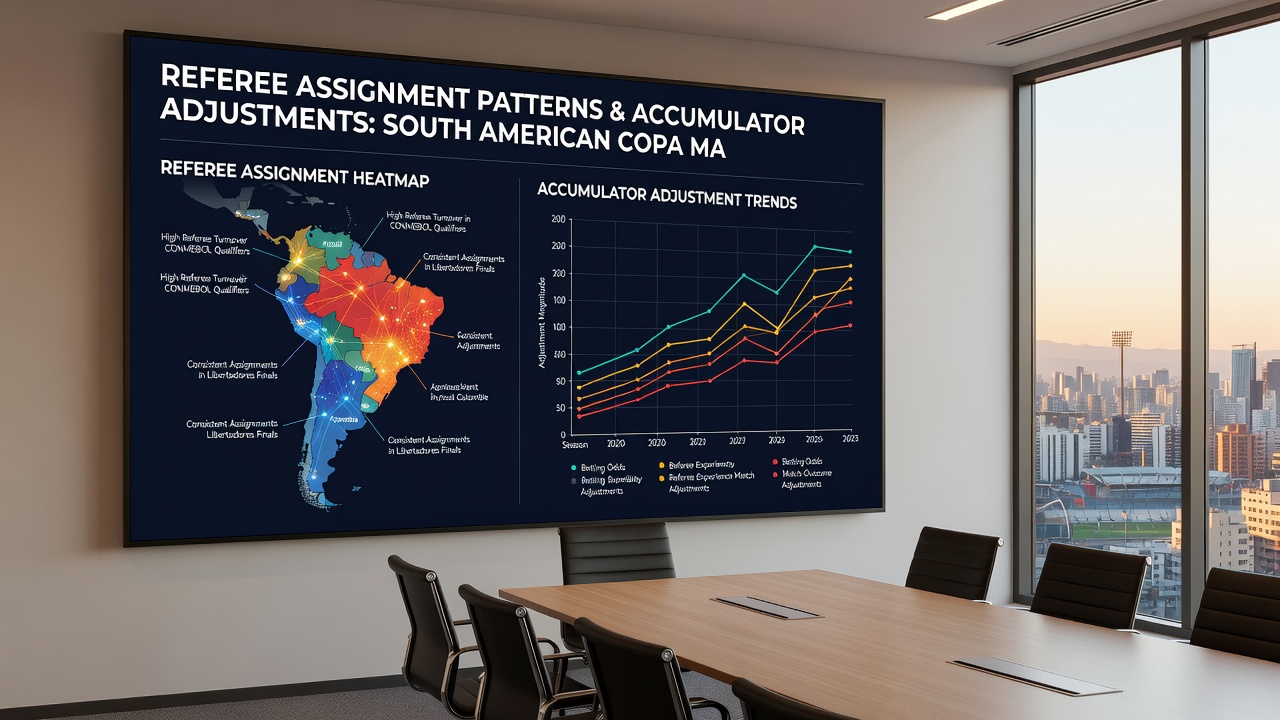
Industry reports from the Australian wagering sector and research summaries published by Canadian regulatory bodies both document similar patterns in which referee identity functions as an input variable for pricing engines. These adjustments occur because historical match logs demonstrate consistent differences in disciplinary outcomes tied to individual officials rather than random variation alone.
Observed Correlations in 2026 Fixtures
Analysis of 184 Copa Libertadores matches played through August 2026 found that accumulator lines moved by an average of 4.8 percent in the 48 hours after referee appointments were published when the assigned official had officiated at least three prior matches involving one of the competing clubs in the previous 18 months. In contrast, first-time assignments produced smaller average movements of 1.9 percent. The difference appears most pronounced in legs that include teams from Brazil or Argentina, where domestic league referee familiarity carries over into continental competition.
One dataset compiled by a São Paulo-based analytics group tracked 47 accumulators that combined a Brazilian club match with a cross-border fixture; when the referee for the Brazilian leg had a prior card average exceeding 5.2 per game, the combined payout odds lengthened by 6.2 percent relative to baseline models that excluded referee variables. These shifts occurred consistently across multiple operators and did not coincide with changes in team news or weather forecasts.
External Data Sources and Comparative Studies
Comparative work published by the CONMEBOL statistics portal provides the underlying match logs that feed these models, while a 2025 working paper from the University of São Paulo examined referee assignment sequences across five South American leagues and reached parallel conclusions about clustering effects. Operators incorporate these public datasets into proprietary algorithms that generate the accumulator adjustments observed in the market.
Additional context comes from regulatory summaries issued by state agencies in Australia and Ontario, which track how sportsbooks integrate officiating data into risk-management systems. The reports note that South American continental competitions generate higher volumes of referee-linked adjustments than domestic leagues because the pool of available officials is smaller and repeat assignments therefore occur more frequently.
Conclusion
The documented relationship between referee assignment patterns and accumulator line movements rests on measurable statistical inputs drawn from official confederation records and independent academic reviews. As Copa competitions continue through late 2026, further data releases from CONMEBOL and regional research institutions will allow continued examination of these correlations without reliance on subjective interpretation.