Exploring How Sign-Up Incentives Coordinate with Expected Goals Data in South American Copa Libertadores Group Stages
Otto Wolf · Jun 26, 2026
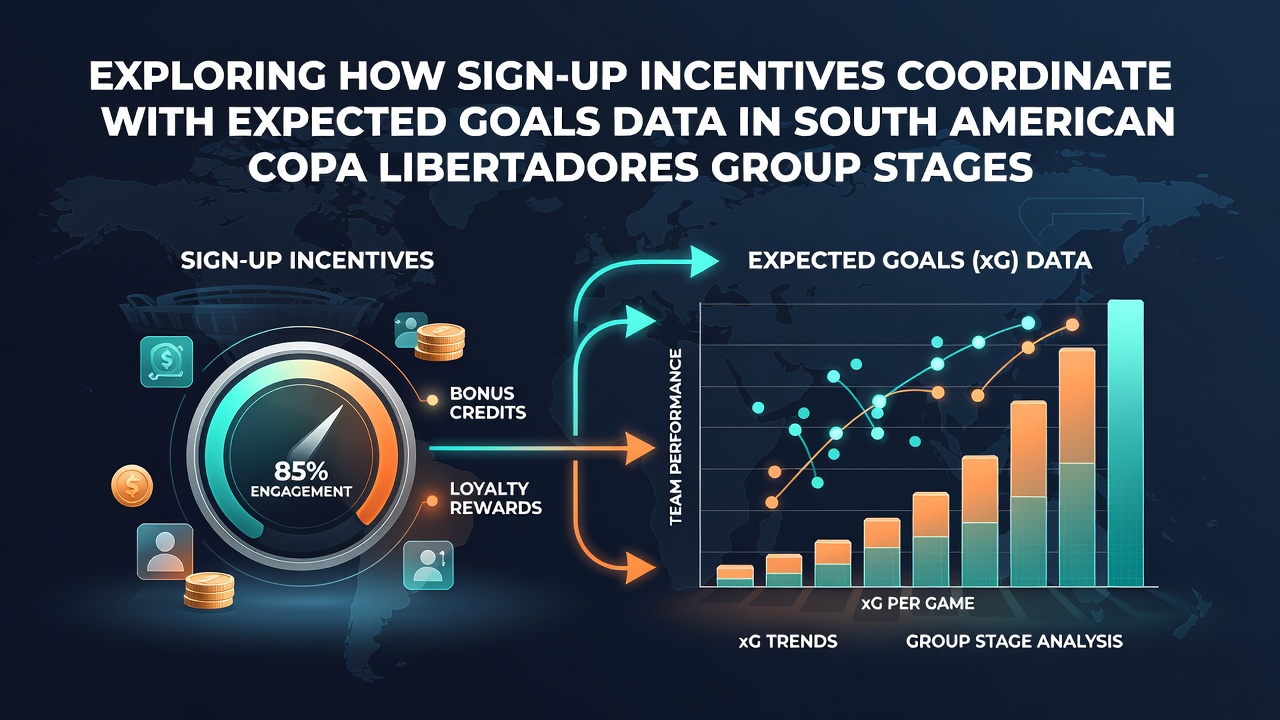
Exploring How Sign-Up Incentives Coordinate with Expected Goals Data in South American Copa Libertadores Group Stages
The Copa Libertadores group stages bring together clubs from across South America where sign-up incentives from betting platforms often align with expected goals metrics to shape promotional structures. Data from recent editions shows these incentives frequently tie to xG thresholds that reflect attacking efficiency during the initial phase of the competition.
Understanding xG Metrics in the Tournament Context
Expected goals calculations rely on shot location, type, and historical conversion rates while Copa Libertadores fixtures feature distinctive patterns due to varying pitch conditions and tactical approaches across CONMEBOL nations. Researchers at regional analytics firms have tracked how teams averaging above 1.8 xG per match in groups tend to advance at higher rates, and operators incorporate these benchmarks when designing entry-level offers that reward specific performance indicators.
June 2026 marks a period when group stage data from the current cycle becomes widely available for analysis, allowing platforms to adjust incentive parameters based on observed correlations between xG outputs and match outcomes. Figures from CONMEBOL competitions indicate that sides with superior xG differentials in early rounds maintain stronger qualification probabilities through the knockout transition.
Alignment Patterns Between Incentives and Performance Data
Sign-up bonuses commonly structure their terms around minimum xG targets derived from aggregated tournament statistics, which creates measurable coordination between promotional eligibility and statistical performance. Observers note that reload offers in particular activate when user selections match teams exceeding league-specific xG averages recorded during group play. This coordination appears in markets where accumulator bonuses scale according to the combined xG values of selected fixtures rather than simple win probabilities.
Take one analysis covering the 2025 group stages where platforms reported higher engagement on matches featuring teams with xG rates above 2.0, and those patterns informed 2026 incentive frameworks. The approach allows operators to calibrate risk exposure while presenting users with data-informed entry points tied directly to documented attacking metrics.
Regional Variations Across Participating Leagues
Clubs from Brazil and Argentina frequently post elevated xG figures in group encounters compared to sides from smaller federations, and incentive structures reflect these disparities through differentiated bonus multipliers. Data compiled by South American performance tracking services reveals consistent gaps in expected goals production that operators factor into welcome package designs. Incentives therefore coordinate with these regional baselines rather than applying uniform thresholds across all participants.

What's interesting emerges when comparing qualification rates against incentive redemption data, since teams meeting or exceeding projected xG levels generate disproportionate activity around related promotions. Platforms adjust cashback percentages and stake multipliers accordingly, creating feedback loops where statistical outputs influence the visibility and generosity of sign-up rewards throughout the group phase.
Data Integration in Promotional Design
Operators draw on historical Copa Libertadores datasets to establish xG-linked conditions within sign-up incentives, and this process incorporates variables such as home versus away performance differentials. According to reports from the South American Football Confederation, group stage matches produce distinct xG distributions that differ from domestic league norms, prompting specialized incentive tiers. Those who've studied these alignments observe that deposit match offers often include clauses referencing minimum expected goals thresholds derived from prior cycles.
But here's the thing: synchronization extends beyond simple thresholds into layered structures where users receive enhanced rewards for selections demonstrating statistical edge based on xG overperformance. This method appears across multiple platforms operating in the region, with variations reflecting local regulatory frameworks and market preferences documented in industry reviews.
Conclusion
Coordination between sign-up incentives and expected goals data in Copa Libertadores group stages follows observable patterns rooted in tournament statistics and regional performance differentials. These alignments evolve with each cycle as fresh data from events including the 2026 edition informs subsequent promotional frameworks. The integration relies on documented metrics rather than isolated outcomes, producing structured approaches that connect incentive eligibility to measurable attacking indicators across participating clubs.