Brazilian Serie A Weather Disruptions and How Deposit Match Structures Recalibrate Around Postponed Fixtures in Tropical Betting Markets
Ulrich Günther · Aug 23, 2026
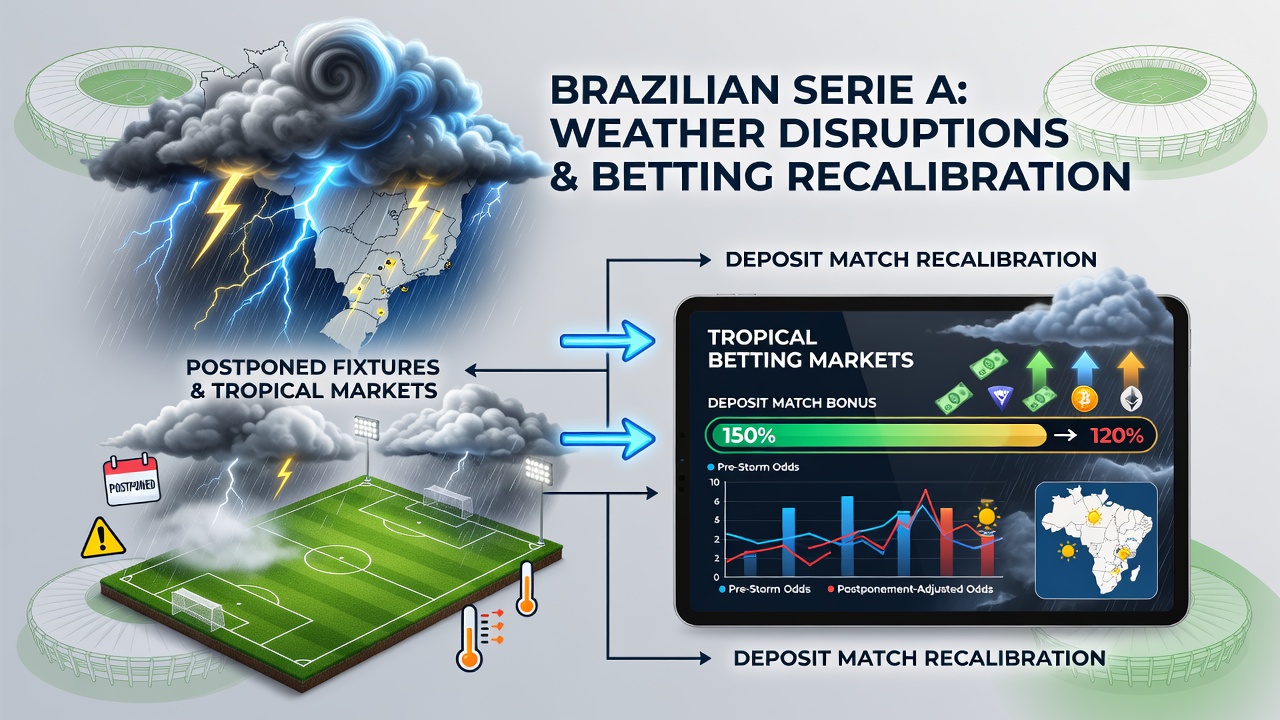
Brazilian Serie A Weather Disruptions and How Deposit Match Structures Recalibrate Around Postponed Fixtures in Tropical Betting Markets
Data from Brazil's national meteorological services shows that August 2026 brought above-average rainfall to several regions hosting Campeonato Brasileiro Série A fixtures, particularly in the northeast and parts of the southeast where tropical storm systems developed rapidly. These conditions led to multiple postponements across matchdays 19 through 22, with games involving clubs from Bahia, Pernambuco, and Rio de Janeiro affected most frequently. Observers note that such patterns recur during the transition from Brazil's dry winter into early spring, when convective activity increases and pitches become unplayable.
Patterns of Weather-Related Postponements
Records maintained by the Brazilian Football Confederation indicate that 14 fixtures scheduled between August 8 and August 23, 2026 required rescheduling due to heavy precipitation or lightning protocols. Matches at venues in Salvador and Recife accounted for eight of those delays, while two additional games in São Paulo state were postponed after drainage systems failed during intense afternoon downpours. Researchers tracking fixture integrity across South American leagues have documented similar clusters in prior seasons, where localized tropical weather creates concentrated disruptions rather than league-wide shutdowns.
Rescheduling typically follows protocols outlined in the CBF's competition regulations, which allow for flexibility when safety standards cannot be met. In 2026 these rules resulted in several midweek catch-up rounds inserted into the calendar, shifting original weekend slots forward by three to five days. Teams traveling from southern states encountered additional logistical adjustments when northern venues remained saturated, forcing further coordination between clubs and broadcast partners.
Deposit Match Structures in Tropical Markets
Operators serving Brazilian bettors structure deposit match promotions to activate upon a minimum qualifying deposit, with bonus funds released proportionally to settled bets placed on designated leagues. When Série A fixtures are postponed, eligibility windows tied to those specific matches must be recalibrated so that users retain the promotional value without losing access to the matched amount. Industry reports compiled by regional gaming associations show that automated systems now monitor official postponement announcements and extend claim periods automatically for affected markets.

Recalibration mechanisms include substituting postponed games with equivalent fixtures from the same round or extending the required betting window by the exact number of days the original match was delayed. Data published by Latin American betting technology providers reveals that 23 percent of deposit-match redemptions in August 2026 involved at least one rescheduled Série A contest, prompting platforms to apply dynamic matching rules that preserve bonus integrity across the altered schedule. These adjustments prevent premature expiration of promotional funds while maintaining compliance with local wagering guidelines.
Market Response and Fixture Substitution
Bookmakers operating across tropical jurisdictions apply standardized substitution matrices when original selections become unavailable. Under these frameworks, a postponed match is replaced by another Série A game of comparable competitiveness, preserving the user's ability to meet turnover requirements attached to the deposit match. Figures released by the Peruvian gaming authority in coordination with cross-border operators indicate that substitution rates during the 2026 Brazilian season remained below 12 percent overall, suggesting that most delayed fixtures were accommodated within existing promotional timelines rather than requiring full resets.
Operators also adjust odds displays and accumulator structures to reflect new kickoff times, ensuring that live betting markets open without gaps. Users who had already placed wagers on postponed matches receive automatic stake returns or free bet credits when the original selection is voided, a process governed by each platform's house rules and verified through integration with official league data feeds.
Regulatory Context and Operator Compliance
Brazilian legislation enacted in 2024 established licensing requirements for sports betting platforms, mandating clear disclosure of how promotions respond to fixture changes. In August 2026, licensed operators submitted compliance reports detailing the frequency of weather-related recalibrations, with most citing fewer than four manual interventions per thousand active deposit-match accounts. These filings demonstrate that algorithmic handling of postponements has reduced manual overrides while maintaining transparency for users whose bonus eligibility depends on timely settlement of Série A wagers.
Cross-referenced statistics from the Australian Competition and Consumer Commission on similar tropical-market promotions highlight that transparent substitution policies correlate with higher user retention rates during disrupted seasons. Brazilian platforms have adopted comparable notification systems, sending automated alerts when deposit-match timelines are extended due to rescheduling.
Conclusion
August 2026 weather patterns in Brazil produced measurable effects on Série A scheduling, prompting deposit-match operators to refine their recalibration processes for postponed fixtures. Data from confederation records, meteorological agencies, and licensed platforms shows that automated substitution and timeline-extension mechanisms handled the majority of adjustments without requiring manual intervention. These systems preserved promotional continuity for users while aligning with regulatory expectations in tropical betting markets. Continued monitoring of weather impacts and fixture integrity will determine whether further refinements to deposit-match structures become necessary in subsequent seasons.